
𓆙
 INTRODUCTION TO THE COLLECTION
In this Year of the Snake, I’ve been developing a collection that interprets the serpent's feminine potency. The serpent sheds only to be reborn again. In the ancient world, the snake symbolized cycles, the womb, the underworld, medicine, intuition, and creation. Its presence is unavoidable. We come across it daily on medical logos, pharmacies, on official NYC trash bins, and on ambulances. The serpent has survived every extinction and adapts whenever the world demands it. With no eyelids, only a transparent spectacle, its gaze is constant. With its body pressed to the earth, it witnesses everything above and below. Despite the Christian association with the “fall of man,” the serpent remains one of the most enduring feminine symbols.
The power of this symbolism deepened after a dream during my last menstrual cycle. In the dream, I entered a society where women mysteriously only birthed daughters due to XX-only reproduction. The Y chromosome had been shrinking over evolutionary time, possibly due to environmental stressors such as climate change, wars, radiation, chemical exposure, and endocrine-disrupting plastics known to increase the vulnerability of male embryos, making them less likely to survive.
In the dream, a group of male medical personnel attempted to intervene through futuristic machinery. They endeavored to take a minority of men to conceive male children, and artificial wombs were designed to allow gestation in non-uterine bodies. Yet, every effort failed. Even with heterosexual reproduction that employed sex-selection technologies, every child was still born a girl. What struck me most was how common parthenogenesis (virgin birth) had become. Women, like certain snake species, were able to impregnate themselves, and therefore all offspring were female. The male contribution became optional or irrelevant. In this dream, society transitioned from the patriarchy, and the feminine principle reasserted itself biologically, symbolically, and spiritually to reestablish centuries of imbalance.
A week later, I noticed posters of Guillermo del Toro’s adaptation of Frankenstein plastered across the city. The synchronicity returned me to one of my favourite university seminars that discussed Mary Shelley’s 1818 novel. Frankenstein is the story of a man attempting to replace the feminine process of creation; to do what only a woman’s body can: gestate, birth, nurture. Victor Frankenstein assembles life by stitching corpses stolen from burial grounds, dissection rooms, and slaughterhouses. Ironically, those same bodies originate from women’s biological labor. Shelley’s nightmare captured the anxieties of early modernity: experimental science, industrialization, empire, and "scientific" race theories that debated over who counted as “human." Shelley’s critique now feels prophetic. Her novel shows how monstrosity is socially produced through Eurocentric definitions of humanity. The creature internalizes inferiority because society treats him as inferior. His sympathies extend toward others who suffer similarly. When the creature reads Volney’s Ruins of Empire, he recognizes himself in the victims of domination. In the end, he rejects the world that first rejected him. He refuses containment, categories, and the fate of Otherness assigned before he could speak.
The modern Western humanist project, emerging as a byproduct of European colonial expansion, historically divided people into those recognized as "human" and those cast as "less-than-human" or "inhuman." These two distinctions, shaped by racial capitalism, colonialism, and epistemology (ways of knowing), privilege those who conform while marginalizing those who refuse to have their personhood, legitimacy, and value defined on such terms. Through the creature, Shelley points toward an ethic of solidarity that crosses every boundary modernity invented: race, religion, gender, class, immigration status, sexuality.
And right now, as the trajectory of history may feel beyond our grasp, it's the persistence of ordinary people and ordinary lives that never make it into the books that keeps the human spirit alive. For me, it lives in the women of my maternal line who feed, nourish, and keep things moving while living through the consequences of disposession. My maternal lineage is full of wounded women deeply connected to their unconscious lives. Even under grotesque patriarchal constraints like marriage and servitude, and living through the horrors of man-made famines, colonization, liberation struggles, and ecological crises, they held extraordinary visionary powers. They sensed telepathically, experienced dreams of various categories: prescient dreams, healing dreams, conception dreams, ancestral visitation dreams, and so forth, and practiced an intuitive intelligence sustained by the knowledge passed down by their female bloodlines and village life. The village was dependent upon the creativity of women who were healers, midwives, herbalists, dream interpreters, or, in European terms, "witches." 
I have been fortunate to grow up around my female kin. Most definitely, because boys and girls, men and women, were segregated to observe spatial modesty. By default, I stayed in the kitchen and the bedroom where my female kin congregated. I quietly observed these whimsical ladies: my mother, grandmothers, aunties, and female elders who held an enchanted and animistic worldview while being devout Muslims. On their good days, when poverty remained in the background and laughter replaced decades of fermenting resentment, they stressed that everything is interconnected and alive; humans, animals, birds, rocks, all of life has intelligence, awareness, and feelings. There was no hierarchy. We all have Souls and come from one source, no matter our cultural or religious designations. And just as humans have a legal system, nature has its own justice-based foundation too - we play a part in its grand orchestra.
I will never forget the week I spent as a young teen with my grandmother's older sister, who was visiting for the summer. She lived a very hard life--you can always tell by someone's eyes and hands. I don't remember how we even got to this point, but she said that when we experience acts of love, kindness, or service, the heart feels its gratitude instantly and blesses the person. You don't have to wait to sit on a prayer rug and make prayers for them--though it's encouraged and complementary. This also applies when we experience deep pain, suffering, or unfairness; the heart registers it and sends out a signal. It happens in the moment.
A lot has changed over the past 25-30 years. I have gotten much older, and so have my female kin, and many other women living in the Western diaspora who have entered menopause or passed their post-menopause phase. They repeatedly express loneliness and disconnection, and show early stages of dementia. It's been decades since they've visited their ancestral land and the community they've left behind. Family kinship ties built on chain migrations have broken down too, with ancestral land disputes, disappearing loyalties and reciprocal obligations, betrayal among extended family members, and many such things that occupy the realities of displacement. Consequently, creative inheritance has been outsourced to the medical and childcare systems, to commercial spirituality, and "experts," in a society that views the elderly as burdens rather than a source of strength, guidance, and power. In a similar vein, many daughters of immigrants with ancestors involved in agarian or maritime activities are cut off from land-based or coastal knowledge, culinary and craft-making traditions, and symbolic interpretations of dreams and visions stemming from the collective unconscious. In the diaspora, where secular science reigns supreme, a young girls dreams go uninterpreted, intuition is doubted, and sensitivity becomes burdensome. All of which at a young age would have been validated by a female elder connected to her roots. Without reviving and retelling them and living a life that honors matrifocal culture, this knowledge becomes neglected, lost, or even appropriated by New Age spirituality. Marie-Louise von Franz once wrote that when a woman stops creating (expressing creativity or imparting wisdom), that's when self-integration is blocked, and she falls into depression.
Perhaps this is why the Empress in the Rider–Waite deck appears radiant, pregnant, surrounded by wheat and flowing water, elegantly dressed and seated on a red throne. She is in her natural, earthy element as a Creator. Abundance flows all around her. The Red is striking and important. Red is the color of blood, birth, passion, desire, and vitality. In Christian iconography, red signifies sacrifice. Across the Mediterranean, red symbolized fertility and war. In the myth of the Gorgon Medusa, one drop of her blood can kill, and the other can heal. A woman's blood is magic because it represents menstrual blood. Pre-modern societies believed the gaze of a woman on her menstrual cycle could turn a man to stone. Such was her power. The blood of birth and the blood of battle are the same life-force.
It’s remarkable how women mediate birth and death, and how much their community relies on them for continuity. As women, we hold a psychic orientation toward thresholds: birth, dying, transitions, and the unseen. We nurse the sick, sit with the dying, hold emotional memory, and sense subtle shifts. Our psyche is trained in holding (Yin), not controlling (Yang). Von Franz calls this “dark knowledge,” a night-vision capacity. It accumulates through burying, birthing, heartbreak, repression, dream interpretation, witnessing cycles, and courageously breaking them. All of this becomes powerful and valuable sacred knowledge that is passed down when a woman hits menopause. If you take a look at fairytales, it is midwives, widows, witches, and crones who appear as guardians of such psychic borderlands. Like serpents, they have seen it all.
The new Atelier Turiya collection is the natural culmination of all these year-long inquiries that attempt to translate and expand the rising Yin/female consciousness. Each piece is shaped by the same forces explored throughout this essay: the fight for sovereignty and truth, the serpent’s archetypal tradition, ancestral creativity that still structures the human mind, and a feminist cosmology.
Rediscovering the dark power of turning men into stone by a creature mutilated and objectified by the male gaze, the mythological Gorgon Medusa is at the heart of this collection. So powerful was the Gorgon's blood that two drops, one from the right side, offered a life-giving drug, and from the left, life-destroying by poisonous snakes. While the patriarchy objectified and demonized her, it's critical to remember that the female gaze never possesses as does the male gaze. But what is the female gaze void of phallogocentric conditioning? John Berger once said that a woman's sexuality and self-image are split: half living, half watching, always conscious of how they look to men. Helene Cixous, in her essay "The Laugh of the Medusa," suggests that the female psyche and sexuality can be explored by women writing about their bodies, emotions, and experiences from their natural, unique perspectives (écriture féminine), or the raw and preverbal expressions. Clarice Lispector, in her final novel "A Breath of Life," wrote how writing itself is so dangerous. It's a descent into the void with no navigation, only a loss of control and certainty and the possibility of feeling wrong. To write without limitless bounds is a costly enterprise with grave existential risks including misunderstanding and self-exposure. For voices that have been historically silenced, writing from the subjective realms, is kerosine set alight--it will burn the whole facade down.
The Cartesian mechanistic worldview attempted to forcibly remove women's autonomy and their agency to make them docile and demure, manageable and controllable. No wonder, by the 14th century, right before the "witch hunts," male painters and their patrons were obsessed with depicting Virgin Mary iconography to represent the "good woman" and associate Eve with temptation and evil. It's comical because this wasn't even a true depiction of medieval women, who at the time were still doing midwifery and healing work. Despite such puritanical Marian representations over the century, women have continued to carve out their own way, just like Medusa. The Gorgon's face and her serpent-associated legacy show up again and again across time and space. Medusa holds empowering representations. Medusa's face is embedded in architecture and on men's military shields to serve as a symbol of protection. Medusa was brutalized for her beauty and erotic power, yet patriarchal societies desperately depended on her for victory and prosperity. To me, Medusa's beauty, sensuality, and erotic power embody the spirit of all the ancient goddesses and later classical goddesses, but also all the powerful and wonderful women we know and have learned from, our mothers, aunties, grandmothers, female elders, female friends, and countless feminist artists, educators, healers, and writers. The collection draws from this paradox and celebrates the female eros: the life force and creative energy of women.
Female power lies hidden in the interiors of the female soul. A new world is forming, and I do believe it will be shaped through this very energy, further strengthened by 2030. 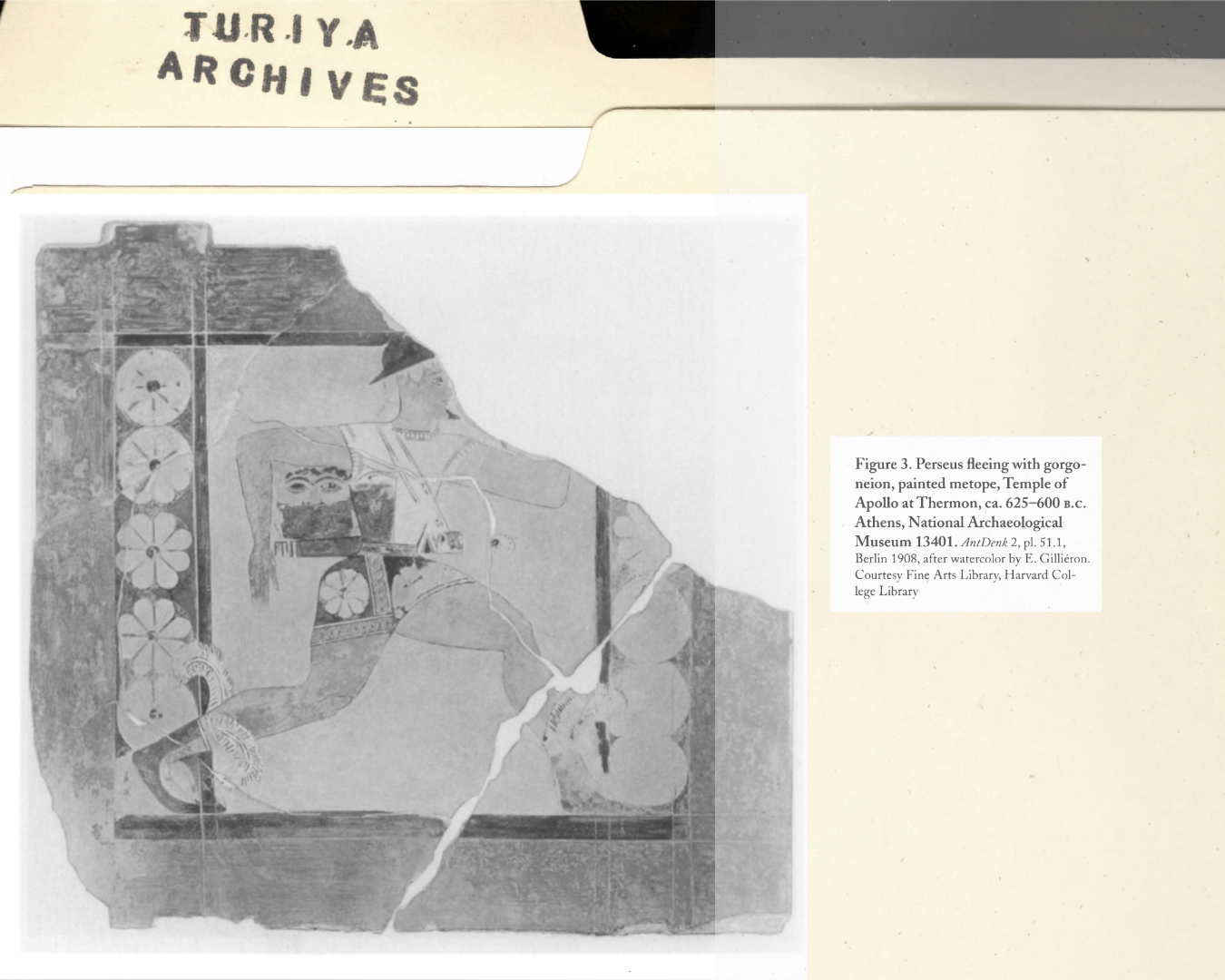
GORGON MEDUSA: HER STORY
Medusa is one of the three sisters of the Gorgon lineage. The night-born dweller of the underworld, she is described in both pre-Olympian and Olympian sources as the only mortal Gorgon. One of many ways the 2025/2026 "The Serpent Sheds Its Skin Only to be Reborn" collection explores serpent power and the female eros is through the 1st-century Roman poet Ovid’s version of Medusa in Metamorphoses, composed around 8 CE. It's not the earliest version of the myth, but certainly one that's shaped our cultural memory and imagination.
In Ovid’s narrative, Medusa is introduced as a mortal Gorgon, a woman of notable beauty and intelligence. She is a priestess of Athena (Minerva), a position that prohibited marriage and required sexual purity. Regardless, her beauty and sensuality attracted many admirers, but Medusa remained loyal to the demands of sacred service. One day, Poseidon, a powerful sea god, violates Medusa within Athena’s temple. Acting as an arbiter of patriarchal order and the audocentric logic of the ruling class, Athena punishes Medusa for the alleged desacralization of her temple. Athena transforms her unruly but beautiful hair into snakes and endows her with a gaze that turns onlookers to stone.
What is striking is the evolving persistence of this story across time, geography, and cultural context. In my childhood, long before knowing the myth, I grew up listening to patriarchal religious sermons warning that a disobedient and immodest woman would have her hair turned into snakes and her beauty devoured on the Day of Judgment. I have to admit, though terrified, I was deeply captivated by this imagery. Now that I am much older, it's fascinating to see how stories elicit and reconstruct narratives from universally recognized myths, to peddle female expression as evil because it can't be controlled. It also made me aware that women, like Athena, participate in and reinforce patriarchal norms through gender socialization within families, including my own.
Within this structure, women split psyches to avoid becoming tragic figures in their own fate. They disown aspects of the Self that are cast into the shadow, a psychic division that amputates their relationship to the subconscious, a place of instinct, dreams, desire, memory, bodily knowledge, ancestral memory, anger, erotic power, and grief. That’s probably why Medusa continues to intrigue me. Her deadly gaze is a problem because it reverses the usual economy of looking. While the male logos controls, constricts, and takes possession of the female image, Medusa reverses the gaze. She is a woman who looks and resists categorization, thereby being demonized as a monster.
For the enlightened Western man, what could not be known, mastered, or assimilated was seen as a threat because it exposes the limitations of the epistemological, and technological systems created by him. Similar to women, nature has always rejected predictability models and measurement, especially when nonlinear interactions occur, like flash flooding, volcanic eruptions, or mutations in the biosphere that allow spieces to adapt. In the case of Gorgon Medusa, rather than submitting to being seen and judged, Medusa returns judgment. Her look engages the viewer and nullifies the distinction between subject and object. Perseus’s cowardice confirms this when he attacks Medusa in her most vulnerable state. He does not confront Medusa, but relies on Athena’s polished bronze shield to decapitate her while she’s peacefully asleep. The shield allows him to avoid her presence altogether by reducing her power to a simulacrum. Jean-Pierre Vernant describes it as a “crossing of gazes.” Medusa is a projection of male anxiety: a woman whose beauty, autonomy, and enigma cannot be fully metabolized, compartmentalized, or dominated. As a consequence, it provokes a trembling fear of confronting mortality and the "invisible" realm of death. Her beheading sugguests an act of excessive violence, staged as heroism, through which Perseus manages his own desire. To kill Medusa is to sever that desire and free oneself from her power. But the female eros can never be destroyed, nor sanitized.
If we take a look at Medusa’s attributes, the serpents, the lethal frontal gaze, and petrification, these aren’t arbitrarily installed. They belong to a symbolic vocabulary that long predates Greek and Roman epics. Archaeological and iconographic evidence from Neolithic Europe, North Africa, and the Near East attests to female figures associated with serpents and birds functioning as protective or divine presences. In these earlier traditions, serpent hair signified wisdom, regeneration, healing, and proximity to forces governing life and death. Across ancient civilizations, the feminine was the entire configuration of life. In these societies, women weren’t just life-givers, which was the most visible expression of divinity, but also a balanced and terrifying force of their own. Nature’s balance was understood through the moods of the goddess, which were believed to mimic seasons, storms, and drought. She was an infinite power, the body of creation, the law of cycles, and a reflection of human destiny.
And to turn a man into stone, right? To turn into stone is to preserve a moment imprinted into the future. Stones hold the memories of incipient life, of its density, presence, and wisdom. Some cultures see stones as sentient beings, carrying stories, traditions, and time compressed into matter that shapes a community. Medusa’s gaze performs this same act of preservation. By turning onlookers to stone, she fixes memory in place and safeguards traces of matrifocal power even as her figure is reconfigured as monstrous--explains why thousands of years later, as mentioned earlier, I am growing up with religious sermons where noncompliance with patriarchy would turn me into a Medusa-esque monster during the end times. And Medusa, we will become especially in a time where the feminine principle becomes active in bringing balance to thousands of years of patriarchal consciousness, by staging an alternative ending to Medusa's tragic ending.
The dialectics of preservation extends into the material language of Atelier Turiya's collection itself. Natural lava stone appears throughout for its paradoxical nature. It is beauty formed through destruction. These ancient rocks are born of fire and pressure and function as material records of creation. Volcanic activity cannot be fully predicted, and volcanic imagery has long been associated with female existence through blood, heat, flow, and eruption. What is framed as danger or excess is, in fact, a process of creation and destruction, birth and death. Even when Medusa is severed from her body, her power does not disappear. Her blood and her gaze retain apotropaic force. When Perseus decapitates Medusa and raises the severed head, he realizes that he now possesses both her deadly gaze and her miraculous blood, each capable of healing as well as poisoning. Power is not destroyed through dismemberment. It is reinterpreted. The Gorgoneion, with its frontal orientation, appears repeatedly across sepulchral monuments, sacred architecture, military equipment, drinking vessels, and the high arts. The very power portrayed as monstrous is simultaneously relied upon for protection, victory, and authority. What is demonized is also instrumentalized. Female eros, feared as excess, becomes a defensive and legitimizing force within patriarchal structures.
Patriarchy shapes the way women move through their daily lives, often in ways so normalized they go unquestioned. It produces a constant tension between women’s lived realities and the versions of womanhood imposed upon them. Many women learn to navigate conflicting messages: internal desires for autonomy, safety, and self-expression alongside cultural narratives that justify violence, control, or limitation. Sexist structures persist not only at the level of attitude but through unspoken forms of power, particularly in the regulation of women’s reproductive lives, as we have attested to in the ongoing struggles over abortion and birth control. It produces a persistent tension between women’s lived realities and the versions of womanhood imposed upon them; it shapes how women relate to their bodies, their appearance, and their self-expression. Medusa represents the convergence of the female eros and female knowledge. A combination that patriarchal systems repeatedly seek to reconstruct. She becomes a symbol of women’s raw creative and psychic power.
Medusa’s image is converted into a weapon, stripped of autonomy and turned against the very world from which it emerged. It's a classic strategy for dominant histories to thrive: they appropriate older forms of power, empty them of their original meaning, and refashion them to serve authority. However, Medusa still lives on in the female psyche. As a figure bound to death and rebirth, she inherits a spiral form that moves through different historical moments. The Gorgon remains a symbol of restoration and permanence beyond linear and victorious time. What persists in her image is a pre-patriarchal, earth-bound cosmology that cannot be destroyed nor forgotten. A reminder that, powerful, beautiful, and terrifying, we must be, to protect our children, the land, and the cosmos.
Medusa holds what Benjamin calls the “spark of hope” embedded in the past that resists subjugation and whose meaning remains unfinished. It slithers to the surface to reunite and re-engage with the collective consciousness. It becomes a source of power and strength, and an avenue for imagining new worlds free of patriarchal tyranny.
MINOAN CRETE: THE SERPENT & MATRIARCHY BEFORE MEDUSA
Spiraling further back into the past, to Minoan Crete, a time long before the myth of the Gorgon Medusa took shape.  Before offering my analysis, it’s important first to understand the role and legacy of Knossos’s primary excavator, 20th-century British archaeologist Arthur Evans. While Evans made significant contributions to the uncovering and reconstruction of the Palace of Knossos, he interpreted Minoan culture through 19th-century evolutionary models of linear progress. Evans sought to chart a great origin story for Europe that rivaled the long-established civilizations of Egypt and Mesopotamia. Influenced by Darwinian thought, he understood goddess worship and femininity as early civilizing forces that expressed themselves through ritual and symbolism. THAT WAS IT. Ritual and symbolism. You see, his imaginative reconstructions basically reduced a matrifocal civilization to his Eurocentric projections of beauty, cultural refinement, & spiritual aesthetics. Rituals and religious authority were historically inseparable from civic and legal power in the ancient world--something Evans deliberately disregards. The fact that this wasn’t a militarized state, and security depended on trade dominance and diplomacy, is extremely fascinating. Women did make laws, administer resources, and were very powerful decision-makers. It’s no wonder that Minoan civilization lasted for roughly 2,000 years and reached its decline due to a catastrophic volcanic eruption that created massive tsunamis on Crete’s coast. This vulnerability eventually contributed to societal breakdown and invasion by the Mycenaeans.
 Minoan Crete presents one of the strongest cases in the ancient Mediterranean for a society organized around female prominence, if not full matriarchy, during the Bronze Age (ca. 3000–1100 BCE). Evidence from art, architecture, religion, and later legal inscriptions suggests that women held high social status, exercised religious authority, and likely retained significant economic rights, particularly during the Middle and Late Minoan periods. Visually, Minoan women dominate the artistic record from this epoch. Frescoes, seals, rings, and figurines depict women far more frequently than men and in active, public roles. They appear in ceremonial processions, dances, public gatherings, and physically demanding rituals such as bull-leaping, which, of course, required athletic training and collective participation. These representations occur throughout palace complexes such as Knossos, Phaistos, and Zakros and include the central courts. In fact, none of this would have been possible if the palace architecture hadn’t been structured to support female autonomy, movement, and social independence.
Additionally, religion was shaped by this female-centered order. Minoan worship revolved around a supreme mother goddess expressed through multiple aspects: nature, fertility, household protection, and animal mastery. Female divinities dominate Minoan iconography, while women functioned as priestesses and primary ritual practitioners. In a society where religion structured political legitimacy and social meaning, this placed women at the symbolic and functional center of communal life. However, during the post-palatial and Early Dark Age period (ca. 1200–800 BCE), these goddesses appear to have been transformed into fallen heroines through the efforts of Greek myths. Medusa belongs to this literary inheritance. Her myth, crystallized during the Archaic period and later shaped decisively by Ovid in the early 1st century CE, who emphasized her petrifying gaze but also preserved the logic of earlier goddess power. We don’t really know if this was intentional, but it reveals how the mind and symbols retain their subconscious and primitive understandings. Like Minoan stone architecture, frescoes, and ritual performances, Medusa’s power does not disappear, considering it is readapted and/or reappropriated with those primal matrifocal traits. The transformation of goddesses into monsters or diminished fallen heroines mirrors the long historical demise of matrifocal systems into patriarchal rule between the Late Bronze Age, a violent transition that occurs with the consolidation of the Olympian religion.

